


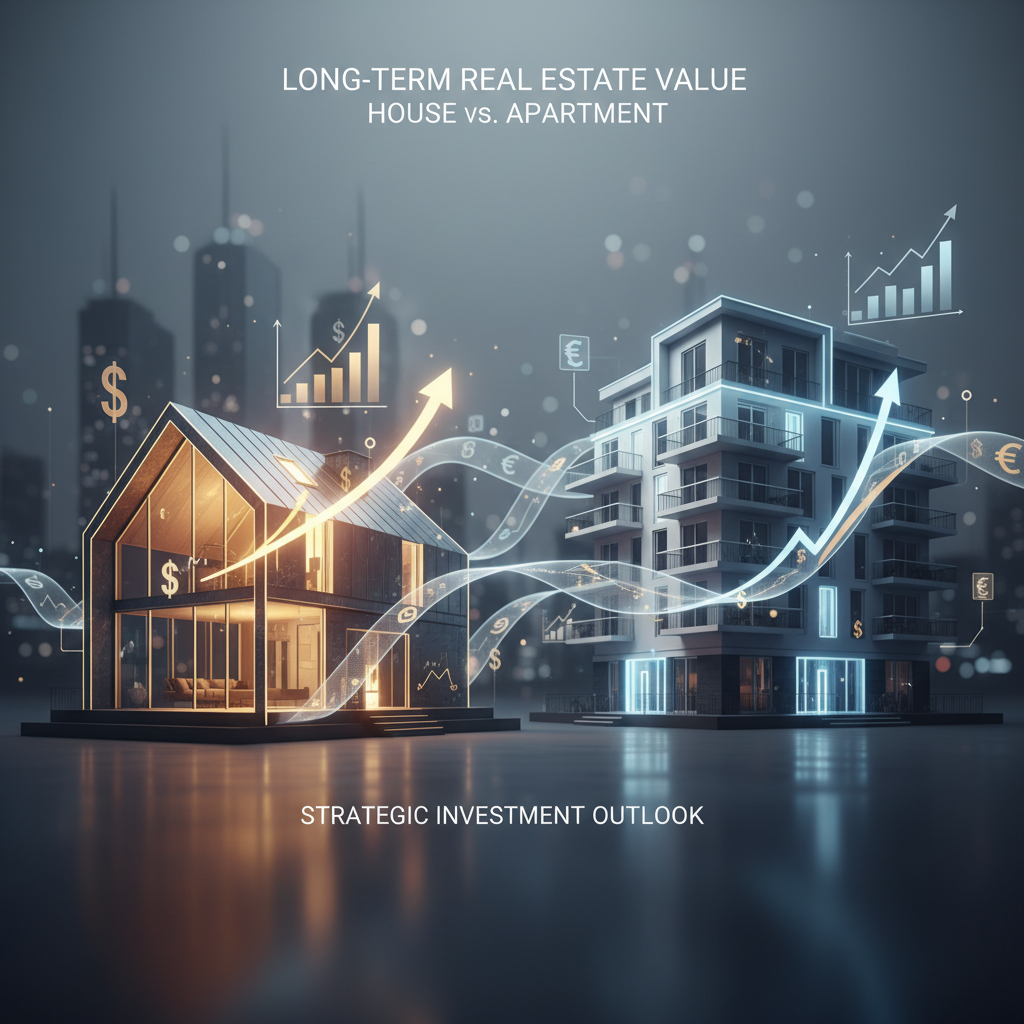
Introduction
In the context of the growing real estate market, the long-term value of a house or apartment is a frequent concern for those who wish to invest or secure their assets.
Choosing between buying a house or an apartment involves careful analysis that goes beyond the initial price, considering factors such as appreciation, use of space, and market trends.
This assessment is especially relevant in large cities where urban dynamics and housing needs vary significantly.
The Peruvian real estate market, especially in Lima, has shown stability and steady growth, making real estate investment an attractive option for generating passive income and building wealth.
However, the purchase decision must be adapted to different profiles and lifestyles, including families seeking privacy and outdoor spaces, and investors prioritizing profitability and ease of maintenance.
This article examines the economic impact and key factors influencing long-term value appreciation between houses and apartments, with a detailed analysis of costs, benefits, infrastructure, and market projections, to guide informed and strategic decision-making.
Economic and investment impact on the long-term value of houses and apartments
The economic impact on the decision to buy a house or apartment is fundamental to determining the long-term value.
Houses generally involve a larger initial investment due to their larger size and, in many cases, the availability of outdoor spaces such as gardens or patios.
This aspect is often associated with greater privacy and freedom for structural modifications, features valued by large families or those who want a personalized lifestyle.
On the other hand, apartments tend to be more affordable in terms of initial cost and offer advantages in terms of maintenance, since common areas and services are managed by the building administration.
For investors, these aspects can translate into lower risk and controlled recurring costs, which directly affects profitability and long-term economic performance.
From an investment perspective, both types of property can appreciate over time, but the location of the property and market conditions are factors that significantly determine this appreciation.
For example, strategic developments near urban centers or with good transport connections usually offer better prospects for growth in value, regardless of whether it is a house or an apartment.
Factors that influence the long-term appreciation of real estate value
Various factors influence the valuation of a property, directly affecting the long-term value of a house or apartment.
Location is perhaps the most decisive aspect; properties located in areas with developed infrastructure, access to services, and proximity to work or education centers tend to increase in value over time.
Furthermore, local market supply and demand influence property values. In cities like Lima, where demand for apartments is typically high among young professionals and couples, this type of property can experience significant price increases.
However, houses located in established residential areas, with green spaces and high urban quality, maintain a stable and attractive value for families.
Other impactful factors include construction quality, area safety, and available amenities. For example, developments that include services such as gyms, recreational areas, and paddle tennis courts offer added value that promotes retention and increases the property's value over time.
Comparison of costs and benefits between a house and an apartment in the long term
Long-term economic analysis between houses and apartments must consider various costs and benefits that go beyond the purchase price.
Since houses are generally more spacious, they involve higher maintenance costs, from gardening to structural repairs, which can affect profitability if they are considered as an investment.
In contrast, apartments typically have monthly administration fees that cover the maintenance of common areas and services, making cost management easier for the owner. This option may appeal to people who prefer less time spent on property maintenance and seek more predictable control over expenses.
Regarding benefits, houses offer greater freedom to adapt and expand the space according to needs, which can translate into greater personal satisfaction and potential revaluation if appropriate improvements are made.
Meanwhile, apartments are usually located in more central urban areas, which facilitates access to services and transportation, aspects that also increase their market value.
Urban planning and infrastructure considerations for valuing residential properties
Evaluating residential properties from an urban planning and infrastructure perspective is essential to understanding their long-term value. Homes are often located in developments that prioritize tranquility and green spaces, factors that contribute to a good quality of life and a stable appreciation of value over time.
Apartments, on the other hand, are more closely linked to dense urban environments where transportation infrastructure, shops, and services are more accessible and diverse. This urban integration fosters constant demand, especially from young people and professionals who value mobility and time.
Municipal planning and projected growth in specific areas are also relevant. Projects that include bike paths, recreational areas, or improved access can increase the attractiveness and value of properties in the long term.
These considerations should be included to obtain a complete view of the potential for appreciation of a house or apartment.
Analysis of the current market and growth projections for houses and apartments
The current real estate market reflects trends that affect the long-term value of houses and apartments. In Lima, the demand for apartments remains strong due to urbanization and the preference of a growing segment of the population for compact and strategically located housing.
The stability in the price per square meter and the diversity of projects support this trend.
For homes, demand is focused more on residential areas with a high quality of life, where value growth can be driven by developments with amenities and good connectivity. Examples of new projects offer advantages in established areas, creating attractive opportunities for both family living and investment.
Projections for the coming years indicate that both types of housing will maintain positive appreciation, but the key will be choosing based on personal and economic factors. Informed buyers will be able to take advantage of these trends according to their needs and expectations, also considering payment options and long-term cash flow.
Conclusion
In conclusion, assessing the long-term value of a house or apartment requires considering multiple economic, structural, and urban factors that impact the investment and quality of life. The choice should be based on personal needs, financial profile, and market projections to maximize benefits.
Both houses and apartments offer advantages and challenges that are reflected in their value and cost management. Carefully evaluating these factors ensures an informed and strategic decision that protects and enhances future assets.
Frequently Asked Questions
What is the main economic advantage of buying a house instead of an apartment?
The main economic advantage of buying a house is the possibility of greater appreciation due to the space and privacy it offers, in addition to the freedom to make structural modifications that can increase its value in the long term.
What factors most affect the resale value of an apartment?
Factors that affect the resale value of an apartment include its location, the quality of the building's amenities, general maintenance, and proximity to shopping and transportation areas.
How does urban infrastructure influence the decision between a house or an apartment?
Urban infrastructure influences the decision because apartments are usually located in areas with better access to services and public transport, while houses are often in areas with more green spaces and less density, which affects the quality of life and the property's value.
Is it more expensive to maintain a house or an apartment in the long term?
Maintaining a house is usually more expensive due to gardening, repairs, and structural maintenance costs, whereas in an apartment, costs are distributed through administration fees that cover common areas, which can make it easier to control expenses.


 Spanish
  English
  French
  Chinese